
There's a question more and more marketing leaders are asking themselves before finalizing their annual budgets: How much of what we're investing in is building something that lasts?
I'm not talking about short-term metrics. I'm talking about something harder to measure and even harder to lose: the way someone remembers a brand after experiencing it firsthand.
That’s the space experiential marketing occupies. And in 2026, it’s redefining how B2B brands across Latin America build relationships, earn trust, and close deals.
From Attention to Transformation: The Shift Defining Marketing in 2026
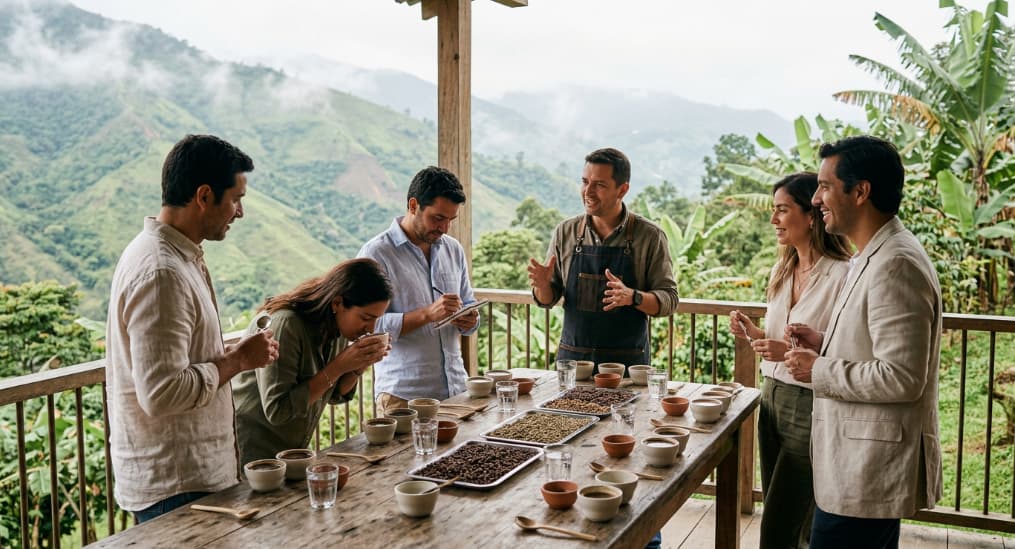
Experiential marketing starts from a different premise: it's not about getting people to see your brand. It's about letting them experience it. And when someone experiences a brand firsthand, something changes in how they remember it, talk about it, and make decisions when the time comes to choosing.
But attention is not the problem. The problem is what happens after a brand captures that attention.
Experiential marketing starts from a different premise: it’s not about people seeing your brand. It’s about them experiencing it. And when a person experiences a brand, something changes in the way they remember it, how they talk about it, and how they decide when the time comes to choose.
That difference isn't sentimental. It's strategic.
In B2B, where sales cycles are long, multiple decision-makers are involved, and trust is the number one factor in choosing a vendor, experiential marketing doesn't compete with other tactics. It amplifies them.
Why Experiences Last When Campaigns Are Forgotten
Behavioral neuroscience has spent decades confirming what the best marketers already intuitively understand: people don't remember information. They remember experiences.
Multisensory experiences with an emotional impact are retained up to six times longer than information delivered through a single channel. And what people remember most vividly isn't the brand's message. It's the emotion the brand made them feel in a specific moment.
For a Trade Marketing Director or CMO designing activations across multiple Latin American markets, this has a direct implication: a well-executed event, a surprising brand activation, or an incentive program that offers freedom of choice aren't representation expenses. They're investments in brand memory.
And brand recall determines which companies make the shortlist when a new buying process begins.
Experiential Marketing in B2B: Three Ways It Transforms Relationships
Corporate Events as Platforms for Trust
A well-designed event doesn't just bring people together. It creates the social context for business relationships to deepen naturally, without the friction of a sales meeting.
When a client or prospect experiences something their company has created for them, their perception of that relationship changes. It's no longer just a vendor-client relationship. It's a company that invested in making them feel valued. And that perception has commercial value that no digital campaign can build as quickly.
Organizations that understand this don't host events just to fill a calendar. They host them because they know something happens there that can't happen over a video call or in an email.
Brand Activations That Get People Talking
The most effective brand activations in 2026 aren't the flashiest. They're the ones that give people something to do together and let content become a byproduct, not the goal.
An activation that sparks conversation between people who didn't know each other before is worth more than any awareness campaign. Because that conversation has an origin: the brand that created the conditions for it to happen.
In the Latin American B2B landscape, where trust is built face-to-face and relationships come before transactions, the ability to spark authentic conversations is one of the most valuable assets a brand can develop.
Incentive programs that communicate values
A well-designed incentive program doesn't just reward results. It communicates what an organization values.
The difference between a cash bonus and a thoughtfully designed experience isn't the monetary value. It's what that reward says about the company giving it. A reward that offers freedom of choice says, “I trust you.” A destination experience tailored to an employee's profile says, “I know you.”
That implicit communication is what turns an incentive program into a tool for shaping organizational culture.
What Separates a Memorable Experience from One That Simply Happens
I've spent nearly three decades working with brands across Latin America, the Caribbean, and Hispanic communities in the United States. And the pattern is consistent: the experiences that drive lasting business impact aren't the ones with the biggest budgets.
They're the ones designed with intention.
Intention means knowing exactly what emotion you want participants to feel. What conversation you want them to have. What memory you want them to take away. Then designing every touchpoint, from the invitation to the closing moment, to make it happen.
When there's intention, the budget becomes a tool. Without it, the budget is just an expense.
The Question Worth Asking Before Any Experiential Investment
Before booking a venue, hiring an entertainment provider, or designing an incentive program, it's worth asking one simple question: What do we want this person to feel when it's over?
If the answer is clear, the rest of the design falls into place. If it isn't, no budget can make up for that lack of direction.
Experiential marketing isn't a format. It's a way of understanding that every touchpoint between a brand and a person is an opportunity to build something or erode it.
The brands winning in 2026 are the ones that have chosen to build.




 Spanish
 English