
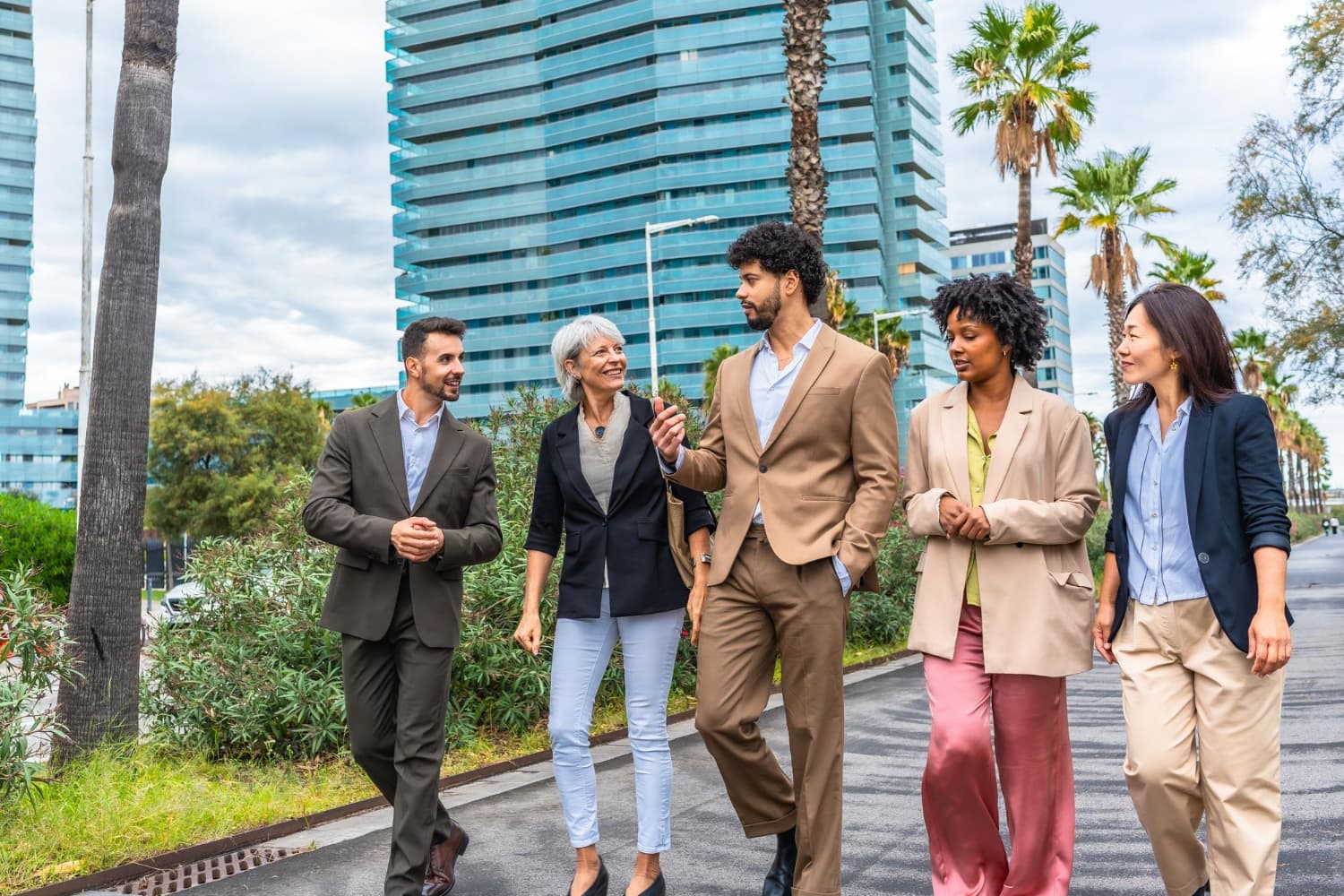
There are moments when a leader can say very little and communicate a lot.
Walking among your team. Listening to a client. Staying after a meeting to chat. Recognizing someone by their name.
They are small gestures, but they build something enormous: the perception of who is really behind a brand. In 2026, that human presence acquires a strategic value that no corporate experiential marketing campaign can replace.
The advantage remains human
Deloitte, in its 2026 Global Human Capital Trends, highlights the need to build a human advantage: combining the possibilities of technology with deeply human capabilities.
The challenge is revealing: 85% of the leaders consider it critical to develop the adaptability of their organizations and teams, but only 7% claim to be continuously leading that process.
For me, that distance also speaks of presence.
Leadership means setting a direction and, at the same time, making people feel that we are traveling that path with them. And when that happens authentically, the brand acquires something that no communication budget can buy: human credibility.
For the teams of Trade Marketing, HR and corporate leaders who design brand experiences at LATAM, this distinction has a direct implication: the most powerful brand experience does not always happen in a large-scale corporate event. It happens when the leader is genuinely present.
When the leader becomes an experience
An institutional spokesperson communicates what an organization thinks. Authentic presence allows one to experience what that organization represents.
Satya Nadella is a good example. At Microsoft, he has placed empathy, curiosity, and a growth mindset at the center of his leadership vision. What’s interesting is how that philosophy transitioned from words to culture. Microsoft has promoted spaces for experimentation and collaboration, such as its global hackathon, while leadership has reinforced a culture of continuous learning.
A Microsoft customer-centric culture research identified an especially relevant principle: leaders must personally model the behaviors they expect to see in their teams.
That's the mechanism. The message becomes a brand experience when the leader's behavior makes it visible. Not when it's in a campaign. When it's in the room.
For organizations that design corporate incentive programs, business events, and brand activations in LATAM, this lesson is strategically relevant: the leader who appears at the moments that matter not only represents the organization; they make it an experience.
Miami: leadership on a human scale
In Miami, I see this dynamic from a different angle.
It is an ecosystem where founders, investors, creatives, and business leaders constantly meet in spaces of technology, art, culture, and innovation. Communities like Refresh Miami have maintained recurring meetings between founders, operators, investors, and leaders of the South Florida tech ecosystem, creating spaces where the relationship happens directly.
And that proximity creates a valuable opportunity: making leadership visible through real relationships.
When a founder talks directly with their community, when a CEO listens to a client, or when a leader participates alongside their team in a corporate retreat or high-level event, the brand gains a face, voice, and personality.
Presence ceases to be a protocol. It becomes a reality. converts connected.
In the context of corporate events and corporate hospitality at LATAM, this principle has a measurable impact: experiences where leadership is present generate greater recall, a greater sense of belonging, and a greater willingness to renew the business relationship or the working bond.
Designing presence
Humanizing leadership does not mean turning the CEO into an influencer.
It means recognizing that every leader’s interaction also builds brand experience. Where they are present. How they listen. How they recognize. What conversations they decide to lead. How they make what they believe visible.
Each of these moments leaves a perception. And when there is coherence between purpose, words, and behavior, those perceptions can become memory, trust, and organizational culture.
Emotion is also designed by the presence of the leader.
A leadership measure that I am increasingly interested in
Beyond how many people recognize the CEO, it’s worth observing how employees, customers, and communities feel when that leader is present.
If they find closeness, listening, consistency, and trust, that presence is doing more than representing the company. It is building brand experience from the inside out.
Because a strategy can explain where we’re going. The leader’s presence can make people want to follow that path with us.
And that, in the corporate experiential marketing of 2026, is the most difficult competitive advantage to replicate.





 Spanish
 English