
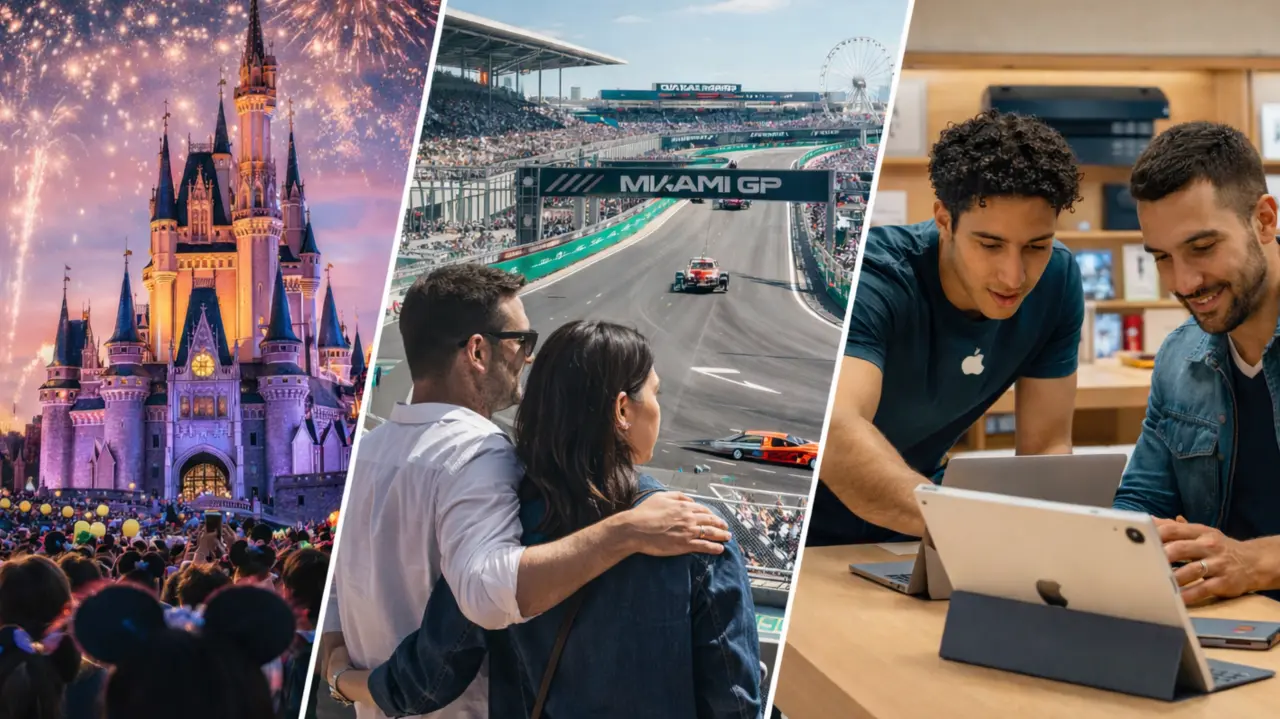
When a brand stays in your memory, the conversation changes. The decision is no longer purely rational. It's familiar, it's emotional, it's almost automatic.
That's why competition isn't just about share of voice. It's about share of memory.
We can be visible without being memorable, and when there's no memory, price decides.
Harvard Business Review has shown that emotionally connected customers can be more than twice as valuable as those who are merely satisfied, and they also show less price sensitivity.
We've seen it and felt it with brands that understood that experience precedes memory.
Disney He understood it decades ago: they are experts at designing memories, regardless of age.
Formula 1 it executes with precision: the value isn't in the seat, it's in the access, in the ritual, the exclusivity, in feeling part of something.
Apple it reinforces it by turning its stores into spaces for creation, not just transactions.
In all three cases, the product is important, but memory is the real asset.
The brand that designs sustained emotion builds trust, and trust reduces price sensitivity.
Not because the price disappears, but because the meaning weighs more.
Maybe the question isn't how much we should invest to be seen.




 Spanish
 English