
There's something I keep coming back to when I study the brands that actually stay in people's minds: they don't just drive engagement. They drive repetition with meaning.
And that's where a real distinction emerges.
A campaign can capture attention for a moment. A ritual can become part of how people live.
Research published in the Journal of Consumer Research has shown for years that rituals intensify the meaning of consumption experiences — turning ordinary objects, moments, and practices into something closer to sacred.
So when a brand manages to engineer a ritual, it stops competing on visibility alone. It starts building belonging.
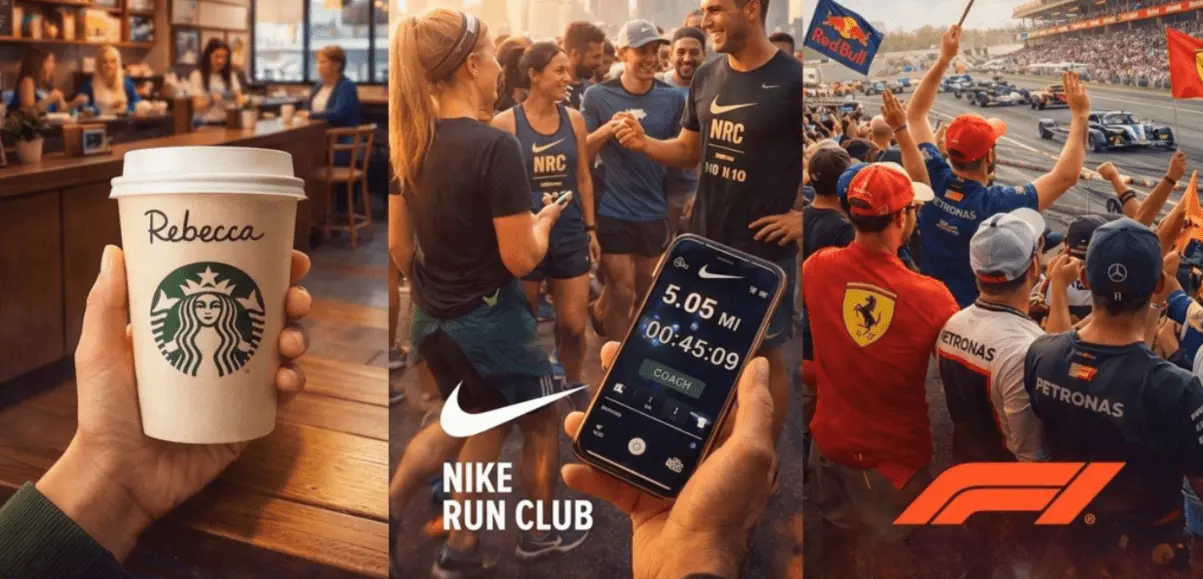
Starbucks understood this early. It doesn't just sell coffee — it designs a repeatable moment. The drink customization, the proprietary language of the order, the idea of the coffeehouse as a gathering place: together, they turn a routine purchase into a personal, recognizable sequence. The company has recently doubled down on this thesis, reframing coffee and human connection as a global ritual and putting the coffeehouse experience back at the center as a place to convene. The result: a high-frequency transaction reframed as a practice with identity.
Nike Run Club pulls off something equally powerful, but through community. It doesn't simply track a run. It gives structure to repetition — tracking, training plans, coaching, and a sense of shared progress. Nike positions it as a "running partner," and that's the key. The ritual isn't going for a run. It's coming back, measuring, sharing, and feeling part of something that's advancing with you. An individual habit becomes a collective experience with its own cadence.
Formula 1 does something similar around the race itself. The pull doesn't live only on the track. It lives in the behaviors the community repeats: arriving early, gathering, wearing team colors, meeting in hospitality spaces, turning the pre-race into an essential part of the experience. The category has been deliberately investing in this fan-experience dimension because it understands the emotion doesn't start when the lights go out. It starts in the shared ritual that makes people feel part of a tribe.
That shifts the conversation entirely.
A one-off campaign can generate reach. A repeatable ritual generates bond. And when that bond compounds, something even more valuable emerges: community.
That's why I think of ritual as a form of strategic design. Not because it looks impressive — because it organizes meaning. It gives people a recognizable way to come back, participate, and feel part of something.
The most memorable brands aren't always the ones that talk the most. More often, they're the ones that earn a place inside a practice people want to repeat. That's the moment the experience stops being an event and starts becoming belonging




 Spanish
 English